How Germany's culture minister picked a fight with three bookshops – and lost
Germany's culture minister cancelled the Bookstore Prize ceremony after backlash over excluding three 'left-wing' shops - though the Berlin case has its own complications.
Wednesday, March 11
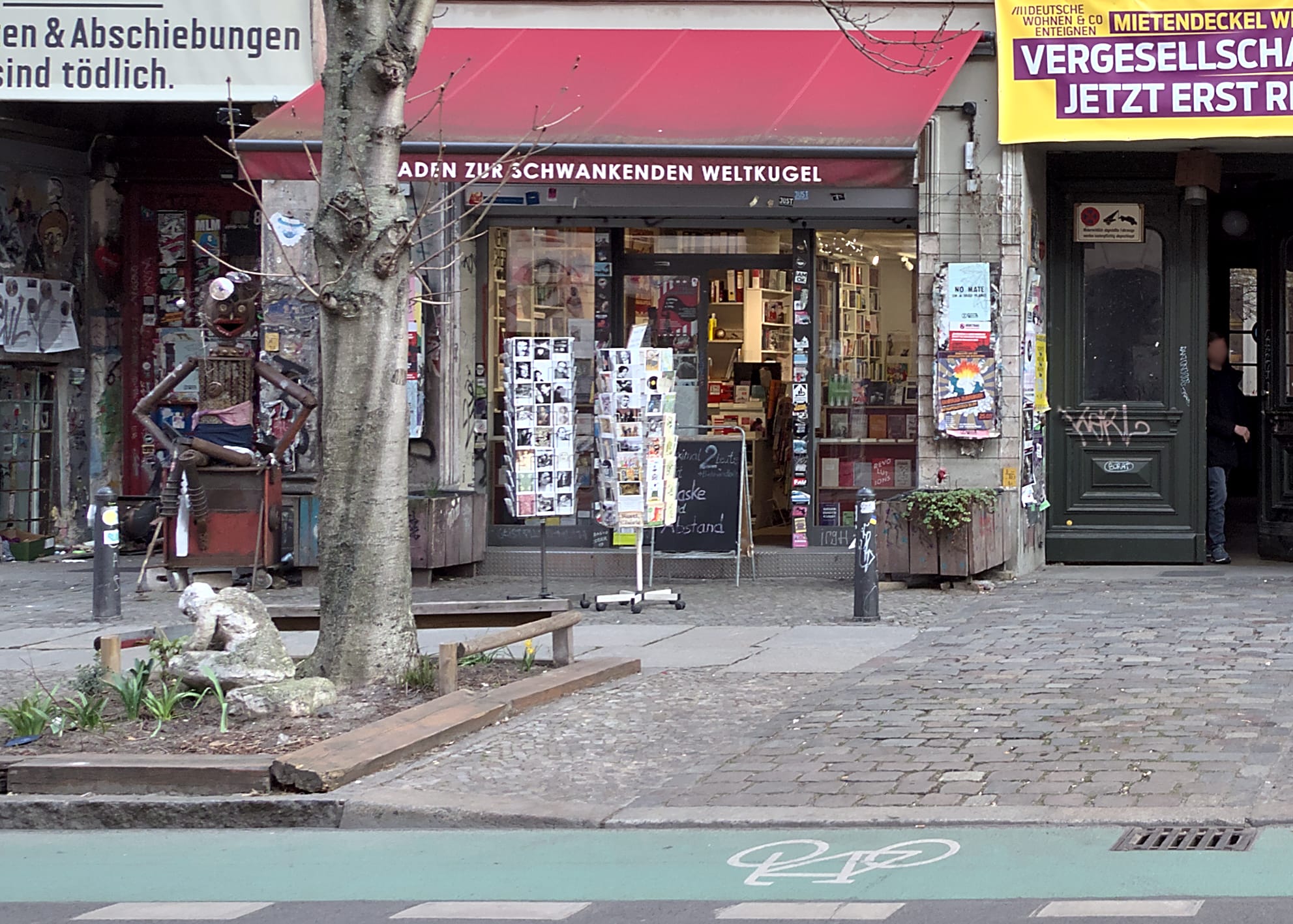
At this point, the culture wars are getting a little hard to follow. Culture minister Wolfram Weimer set off a huge debate last week when he controversially removed three independent bookshops from the shortlist for the German Bookstore Prize, an honour which comes with up to €25,000. The three shops — all apparently targeted for being too left-wing — were The Golden Shop (Bremen), Rote Straße (Göttingen), and Schwankende Weltkugel (Berlin). This politically motivated and legally dubious move brought significant backlash, with the 115 remaining bookstores who could receive the prize promising to pool their resources and support the three excluded shops anyway.
"The debate surrounding the exclusion of three jury nominations threatens to increasingly overshadow the true purpose of the event"
Now, seeing that nobody likes his decision, Weimer has opted to cancel the ceremony altogether. "The debate surrounding the rejection of three jury nominations threatens to increasingly overshadow the true purpose of the event — namely, the recognition and honouring of independent bookstores. Appropriate recognition of the award winners seems hardly possible in such a context," the Federal Government Commissioner for Culture and the Media announced. The prize was set to be given out at the Leipzig Book Fair on March 19, but the ceremony will no longer take place. The winners won't miss out too much, though: publisher Hanser Verlag has reportedly stepped in to host a party for all 118 shops.
As well as being unpopular, Weimer's move may also have been unconstitutional. The ministry excluded the bookshops through the so-called Haber procedure, an internal government mechanism that allows ministries to request assessments from the domestic intelligence agency before disbursing public funds, on the grounds of suspected links to extremism. And that is what happened here, it seems. The ministry queried the Verfassungsschutz, which confirmed it had findings on the three shops. What those findings actually are — and whether the ministry was itself tipped off beforehand — remains murky. The shops themselves only learned of their exclusion through the press.
As well as being unpopular, Weimer's move may also have been unconstitutional.
But even so, this may be legally shaky. Constitutionally, the transmission of such information is only permissible if it concerns a "particularly important legal interest" — a threshold that does not appear to have been met here.
In Berlin, solidarity for the bookshop has been tempered a little by some who point out that Schwankende Weltkugel in Prenzlauer Berg is antideutsch — part of the vehemently pro-Israel faction of the German left.
Real journalism costs money. And we’re committed to paying our contributors fairly.
Support HEIST with a donation.