How to Build a Film Utopia: Archival Assembly #4
Now at Arsenal Kino's new home in Silent Green, Archival Assembly is a deliberately political, universalist film festival – and it's not afraid of big ideas.

A short walk from the 24/7 circular public hangout at Martha-Ndumbe-Platz, this might seem an unlikely place for a utopia. And yet, with what Arsenal Kino are creating in their new home, it has every reason to feel like one.
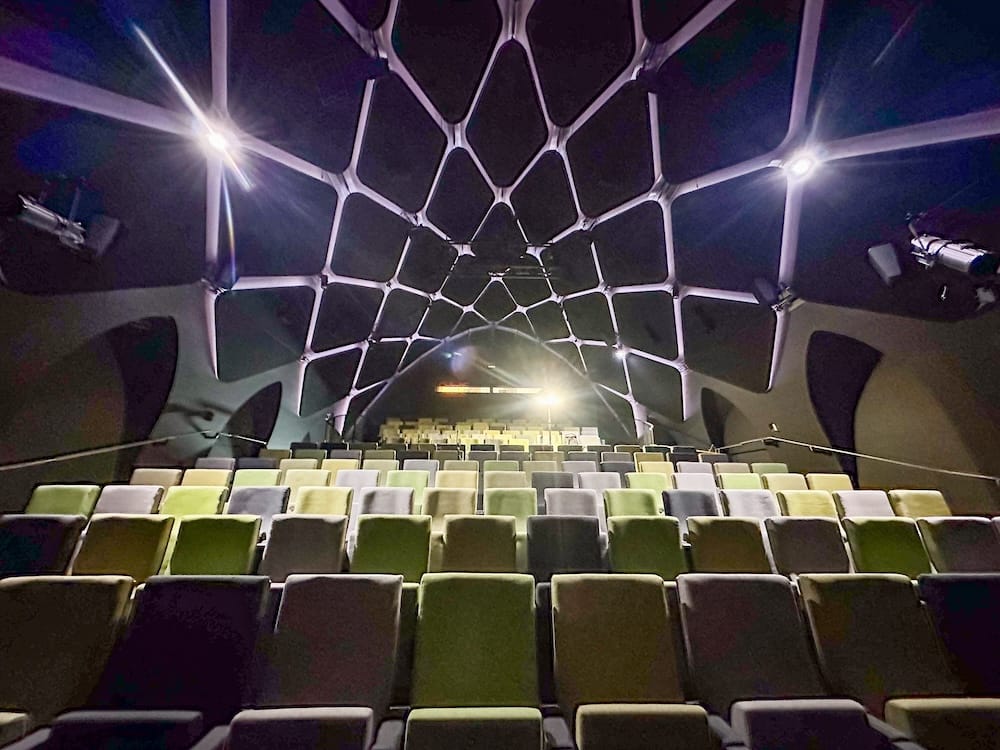
Arsenal Kino has long been the go-to place for film lovers in Berlin to experience some of the lesser-known classics of world cinema. Speaking personally, it's where I first saw Sergei Parajanov's The Colour of Pomegranates, Charles Burnett's Killer of Sheep, and was, for years, the only really good reason to go to Potsdamer Platz. Now they've moved, taking residence in Wedding's modernist former crematorium at Silent Green, where they've got their own cinema and a festival: Archival Assembly, which will this September celebrate its fourth edition.
"In the first place, the idea behind this festival was to bring together academics and non-academics, people from film and art, professional and “accidental” archivists, established institutions and precarious projects, North and South: All of them tend to operate separately—often because of a one-sided power imbalance—even though they could learn so much from one another," explains curator Stefanie Schulte Strathaus, speaking on a video call from Cairo. "That's the very idea, and that made the first edition very successful. It was like a wow effect for everyone. Our partners, Cinémathèque suisse and Goethe-University in Frankfurt – a heritage institution and a university – are sharing those ideas."

That was in 2021, and since then the festival has maintained that spirit of trying to bring those normally disparate elements together. The event stands out against the gathering political winds in Germany. Deliberately universalist, global, political, experimental, and unapologetically complex. As Schulte Strathaus puts it, "we need more complexity in the world."
This year's edition carries the title ‘Archives, otherwise’. And its worth digging into what’s different about the film archive assembled by Arsenal, which has built up as a repertoire of political, critical, progressive filmmaking from across the world since launching in 1971.
Most major film archives are national institutions, explicitly intended to shape a country’s self-image. "In the West," Schulte Strathaus says, "this idea of national heritage - as it developed in Europe in the 19th century - is very much used to create a sense of national identity, oftentimes based on a feeling of being attached through culture," And yet national identities are a construct, and film is a form that does not need to obey borders. "Why should it be the nation that inherits a film heritage? There could be many more people around the world who relate to it in ways other than through national citizenship." One panel at Archival Assembly #4 will take up the idea of "paranational" film – that is, film which does not simply seek to connect different countries, but which aims at finding some area of commonality beyond the idea of the nation-state altogether.
Another thread in this year's programming complicates that idea further, running through Archival Assembly #4 is the idea of restitution. Normally, this is a question archives and museums face in the context of stolen colonial trophies, precious artworks, or, most dramatically, human remains. But how do issues of restitution play out in a film archive?
Deliberately universalist, global, political, experimental, and unapologetically complex.
“The notion of national heritage is a different matter when cultural heritage has been appropriated and a claim to national heritage is part of struggles for liberation. That said, in the film industry, there are also reasons—such as co-productions or distribution—why copies are located in other countries.”, Schulte Strathaus adds. Over the years, Arsenal has built up vast holdings of experimental, politically charged filmmaking through its curation of the Berlinale Forum. Among those holdings are a number of films from the Global South, where prints can be rare, or come from politically fraught environments of censorship and repression that make a film hard to store safely in its country of origin.
"We have films we really need, because they tell an important, untouched part of history, or a forgotten part of history – unique prints, or films from countries with censorship, that were just given to us to protect them," Schulte Strathaus says. "So it is a really unique archive. There is nothing like it."
"Some of the films that helped us to be who we are as an institution were made by people in Senegal or in India or wherever. Oftentimes the films don't exist there anymore," she says. "It's not that they were stolen – we kept them for distribution and made German-subtitled prints. But we still feel responsible and want to give back."
This, really, is what makes ‘Archives, otherwise’ more than a slogan. Unlike many holdings of world art, Arsenal's collection attempts to make use of its archive. These films are made to be shown. Much of the institution's work goes into restoring and digitising its collection, and into collaborating and partnering with institutions in the countries the films came from. Often, this process demands a degree of local knowledge and specificity that outsiders might not expect.
"There's one project we're working on now, with films by the Syrian filmmaker Omar Amiralay," Schulte Strathaus says. "We decided to restore them with our partners in Egypt – a film institution, Cimatheque, that's established a workflow for archival work and restoration in recent years. There are also a lot of Syrian people here in Cairo, including refugees, and, of course, the Cimatheque team is part of Arab culture and speaks the language. A restoration always involves a lot of decisions – around colour, sound, translation, and so on – and we feel that restitution actually begins at the moment of who makes those decisions. They simply know a lot more than we do about the film and its context. This is where the restitution process begins."
A Mini Guide to Archival Assembly #4
- When and where: 25 to 30 September, at the new Arsenal cinema in Silent Green, Wedding.
- Theme: Archives, otherwise
- Opening day: A masterclass with found-footage filmmaker Bill Morrison, followed by Pnyx, a new work by Angela Melitopoulos and Kerstin Schroedinger, a conversation with Sigrid Weigel on her study on transnational cultural policy beyond national culture, then the restored Kaddu Beykat (Letter From My Village, Senegal, 1975) by Safi Faye – the first internationally recognised film by a sub-Saharan African woman director. This is its German premiere, and its first public screening since the restoration's debut in Locarno in August.
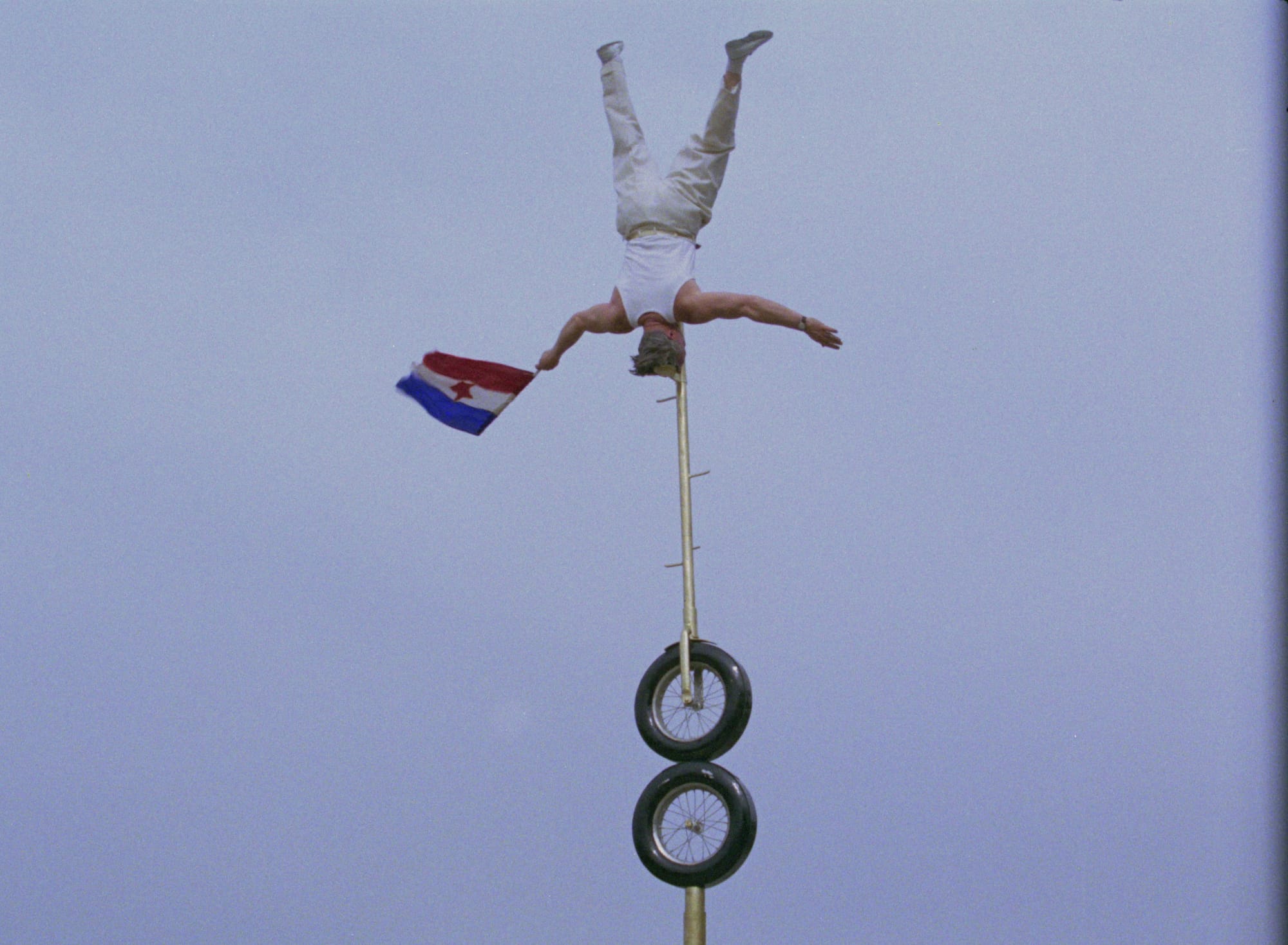
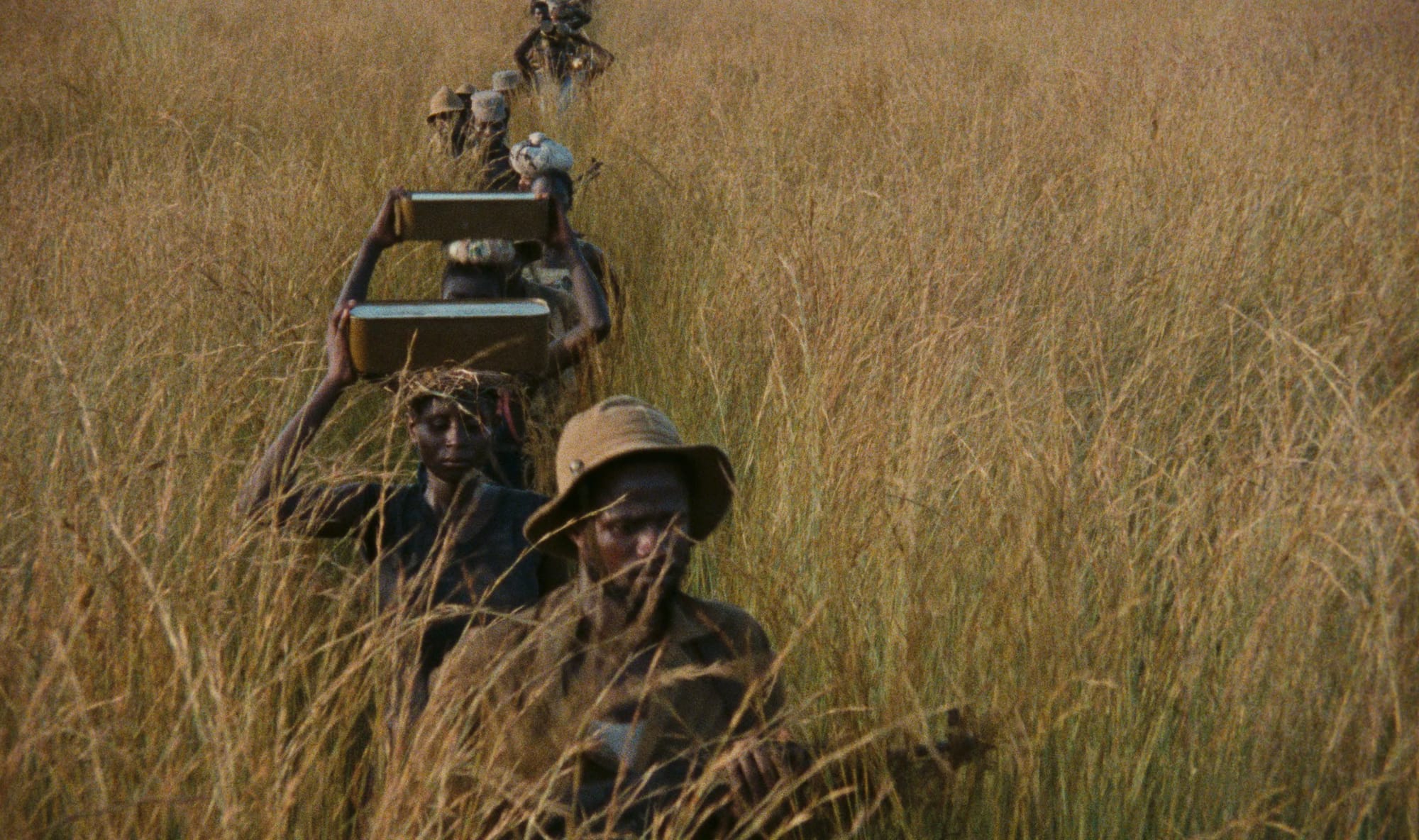
- Film Highlights: A running programme of Nigerian film history, Post-Memory, Post-Archive: Nigerian Film History (1960s to 1980s); Mortu Nega (Flora Gomes, Guinea-Bissau, 1988); O Vento Sopra do Norte (José Cardoso, Mozambique, 1987); early films by Ahmed Bouanani (Morocco, 1966–1973); Nevinost bez zaštite (Dušan Makavejev, Yugoslavia, 1968); Crimean Childhood Around 2000 (Anastasiia Bergalevich); and Inside the Dwoskin Archive, on the British filmmaker Stephen Dwoskin.
- Format: Programming runs "horizontally" across each day – panels, screenings, and Found Futures sessions (a free-form slot for project presentations). Evening screenings in the main cinema can be attended by themselves, without a full day pass.
- Tickets: Festival pass 50 euros (40 euros reduced); day pass 15 euros (12 euros reduced), both including evening screenings. Single evening tickets also available at the box office.