With Its Queer Rhetoric, the AfD Attempts to Swing Both Ways
The use and abuse of queer identity by the German far-right.
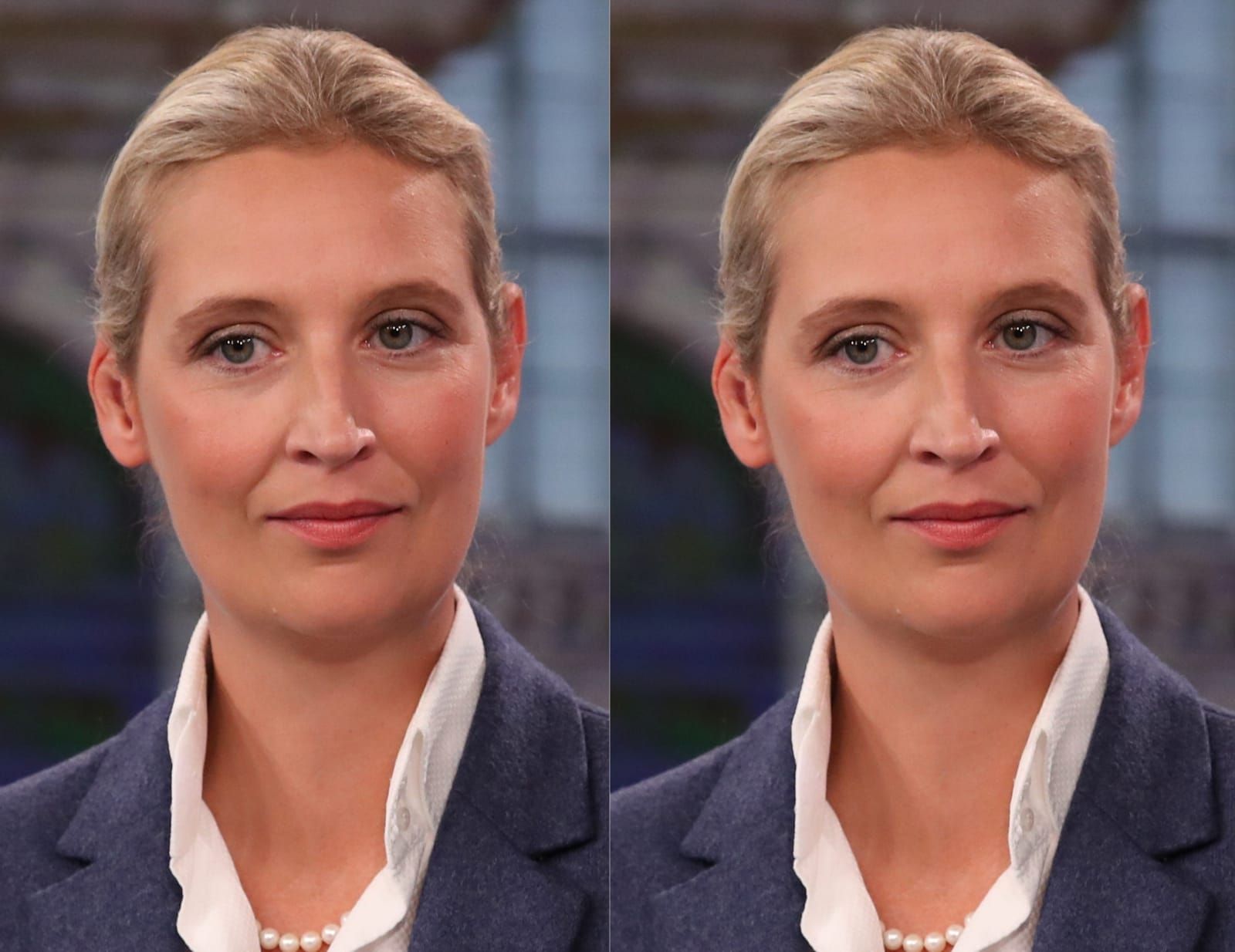
As Brecht wrote in his 1933 poem, “O Deutschland, bleiche Mutter.” State and local elections in early March saw sharp gains across Germany for the AfD, the political party that has not only been confirmed to harbor Neo-nazis in its ranks, but has also been federally classified as a right-wing extremist (a classification it is challenging in court).
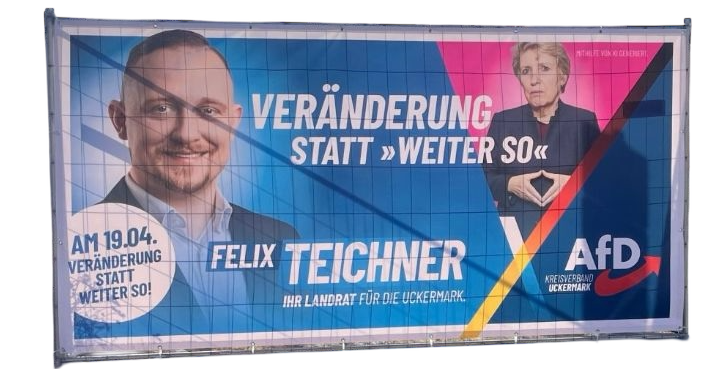
During campaigning for an upcoming local election in Brandenburg, an AfD hopeful in the Uckermark rolled out banners in which the incumbent, Karina Dörk of the CDU, was pictured in an AI-generated Merkel pose inside an inverted pink triangle. Dörk. Local authorities raised alarm that this was a deliberate reference to Nazi-era symbolism. The AfD candidate has waved this off with the excuse that the AfD’s federal leader, Alice Weidel, is married to a woman . How could the party be homophobic?
The AfD is caught between two poles: appealing to gay and lesbian voters to claim them among their ranks, and using homophobia and transphobia to fire up its base. In 2017, Weidel claimed that the AfD was “the only true protector of gays and lesbians in Germany”. The LSVD, Germany’s largest gay and lesbian civil rights group, refers to the party as having “massively LGBTQ-hostile rhetoric.” The AfD’s parliamentary manager, Stephan Brandner, has stated that he believes marriage equality violates the German constitution. AfD parliamentarians have compared homosexuality to paedophilia. Leaked chats have exposed homophobic attitudes among elected AfD officials. The party opposes the “one-sided glorification of homo- and transsexuality” in schools and has repeatedly tried to overturn gay civil rights in parliament. Even Weidel has stated she supports same-sex civil partnerships, but not marriage. She also insistsshe is “not queer, simply married to a woman whom I have known for twenty years.” Meanwhile, Weidel is unafraid to use LGBTQ-hostile imagery herself: she once posted an AI-altered picture of Berlin’s [almost alarmingly heterosexual] mayor Kai Wegner in a rainbow T-shirt, as if to suggest his mildly pro-gay positioning was to blame for his catastrophic management of the city.
In 2017, Weidel claimed that the AfD was “the only true protector of gays and lesbians in Germany”
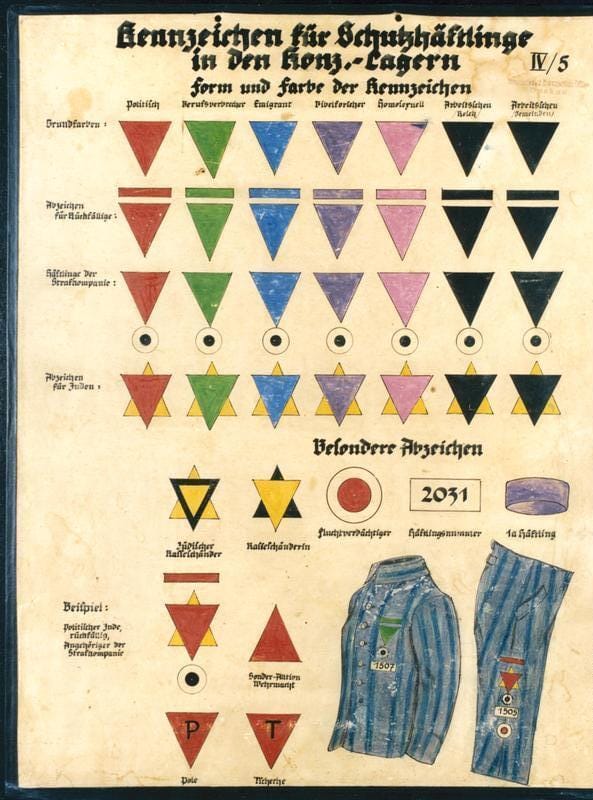
Other European far-right parties like the French National Rally have adopted a softer public tone in order to win elections, the AfD seems to shoot from success to success the more openly fascist it becomes. Part of the party’s strategy is its use of controversy to attract attention. Already in 2023, the AfD used iconography sharply reminiscent of the coloured triangles worn by inmates at concentration camps to call for ban on the use of gender-inclusive language at universities in Saxony. (A similar ban was eventually confirmed into law by the ruling CDU, which has also adopted gender language as a culture war issue.)
Plausibly deniable hate symbols and outraged news articles about them attract people who share the particular bigotry in question, while the party’s denials calm newer and less ideologically committed supporters. The discourse, meanwhile, is ratcheted ever further to the right. Two years ago “remigration” was a secret term unveiled by investigative journalists who spied on a secret AfD meeting; now it’s part of the party’s policy platform. Transphobia is one of the party’s central planks – it emphasises a return to supposed natural nuclear families and the need for German women to bear German children. Through trans- and queerphobia, the party both feeds its racialist obsession with German birthrates and reasserts hierarchies of gender, of class, of race. The people who want to rule us want us to meekly accept our lot: unfortunately for them, we Untermenschen have never been particularly meek or mild.
The historical points of comparison for this mixed political positioning are revealing. People who’ve seen shows like Transparent or Babylon Berlin are familiar with the many Weimar-era gay, lesbian, and trans movements of that era; but just like today, those movements took many forms. Some gays and lesbians understood themselves as in continuity and community with trans people, others, so-called masculinists, were violently opposed to the idea that their noble, heroic love of men might be confused with weak, Jewish effeminacy or unnatural transgenderism. Then, as now, gays were politically divided: in 1932, of 31,000 readers of Friedrich Radszuweit’s commercial gay journal Pages for Human Rights, half identified with parties of the left and the other half split evenly between parties of the centre and the right. In early 2025, on the [mostly-male] gay dating profile Romeo, nearly 30% of 60,000 users surveyed indicated they would vote for the AfD – well above the national average of 20% reached by the party in elections later that year. And then, as now, some elements of queer communities sought to distance themselves from other Others. Ironically, the civil equality for gays and lesbians that the AfD so desperately opposed may strengthen its position with conservative gay and lesbian voters.
The idea of “homonationalism” is a way of explaining how states incorporate gay and lesbian people as part of a narrative of progress that excludes outsiders.
Weidel is not the first far-right politician to play this game. The idea of “homonationalism”, as coined by theorist Jasbir K. Puar, is a way of explaining how states incorporate gay and lesbian people as part of a narrative of progress that excludes outsiders. We, the modern enlightened Europeans, have accepted gay and lesbian people into our societies, and now they, the dusky hordes of migrant Others, threaten our progressive societies. The father of European homonationalism was, perhaps not coincidentally, the father of the new European right: Pim Fortuyn, a Dutch politician, wasn’t just openly gay, but actually mused in interviews about the taste of semen and the joy of having sex in darkrooms. He also called Islam “retarded” and worried about birthrates, “islamisation,” and multiculturalism. “I don’t hate Arabs,” he once said, “I even sleep with them.” His public image as a sexual gay man helped him sell bigotry as tolerance, arguing: “In what country could a party leader of such a big movement as mine be openly gay? How fantastic that this is possible here. You can be proud of that. And I would like to keep it that way.” His politics emerged as gay and lesbian civil rights were achieved in the Netherlands earlier than almost anywhere else; same-sex marriage became legal there in 2001. Had he not been assassinated by an animal rights campaigner in 2002, Fortuyn likely would have been elected Prime Minister of the Netherlands, and been Europe's first openly gay elected leader.
In my book Bad Gays, an exploration of homosexuality’s collaborations with power and evil co-wirtten with Huw Lemmey, we argue that far-right gay politics like Fortuyn’s (and Weidel’s) are perversely enabled by a climate of civil equality in which some gays and lesbians feel like secure elements of the national community and therefore feel free to vote their race and class instead of their sexuality. In an essay in Pages for Human Rights, Friedrich Radszuweit wrote that SA commander Ernst Röhm’s homosexuality proved the Nazis weren’t going to be as bad for the gays as some people feared. He praised Hitler’s focus on “political issues” rather than “sexual questions”; previously, he had insulted “those Jews (especially Dr. Magnus Hirschfeld) who wish to, in an ugly way… drag people’s sex lives into the public.” Radszuweit wrote so positively of the Nazis that the newspaper Die Welt wrote his article up under the headline, “The Third Sex Greets The Third Reich.” Two years later, the final archival file on Radszuweit’s organisation, written by a Nazi stormtrooper, reads: “The liquidation is ended. Heil Hitler!” Two years after that, Röhm was shot.
That today’s Röhms and Radszuweits are unlikely to meet a similar end is cold comfort for those of us who fear being locked up or shot dead next to them. As ever, only solidarity, a rejection of the cold comfort of collaboration with the Right, and a clear-eyed focus on building power every day can keep all of us safe. We must love one another or die.