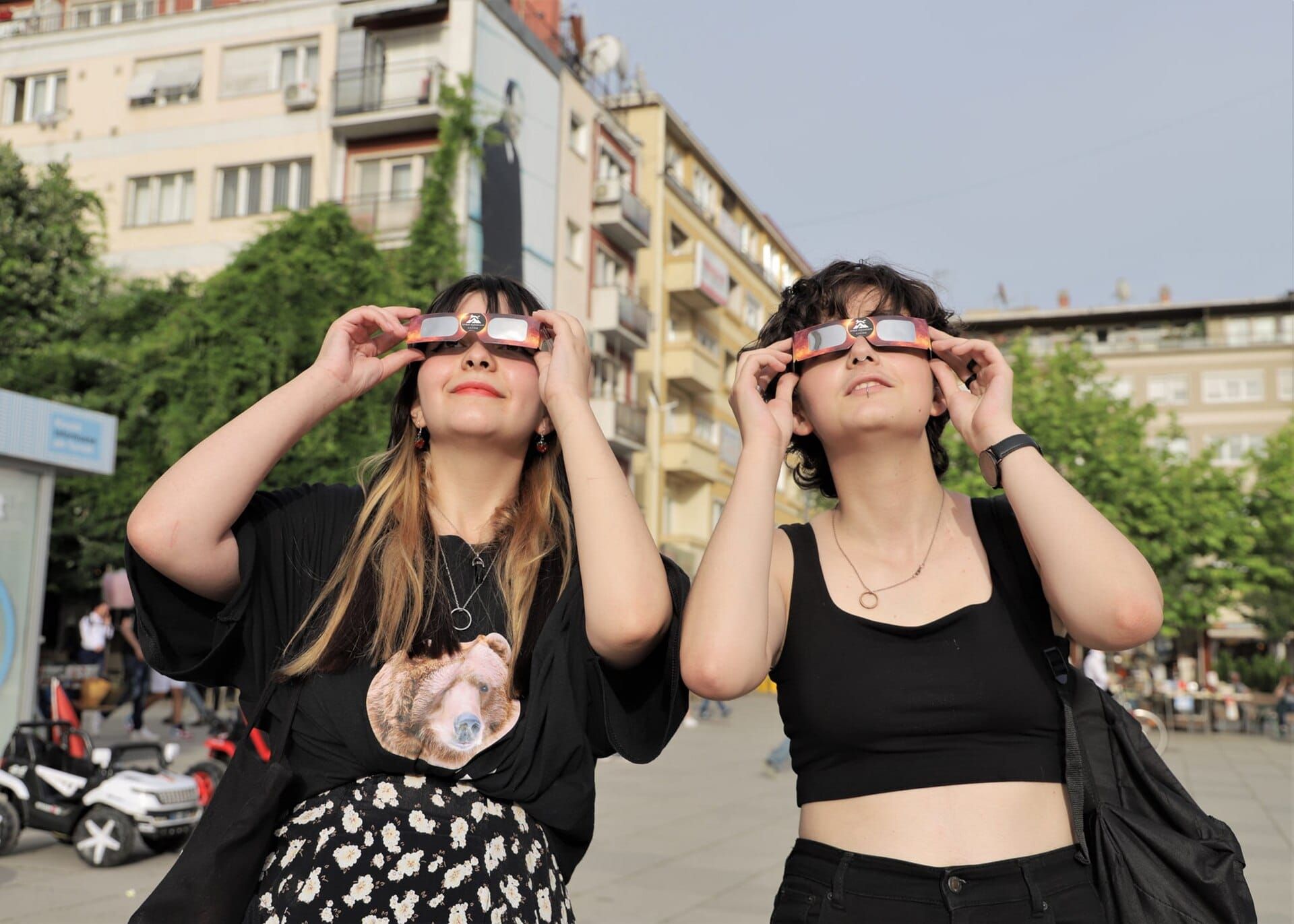
From 7:15 pm to about 8:38 pm on Wednesday evening, much of the city's population will don cardboard sunglasses and find one of Berlin's few high points to watch what will be the most significant solar eclipse we've seen in years. During that time, the moon will partially obscure the sun, blocking about 85% of the light in Berlin and Brandenburg at its peak time of 8:08 pm.
An eclipse is a rare occasion for Germany; the last total solar eclipse was in August 1999, and the next one won't occur until 2081. In Berlin, the last partial solar eclipse was in October 2022, when the moon covered just 32% of the sun. But while Berliners buy up protective eyewear and make plans to watch the spectacle, experts warn that the cosmic event could be less dramatic than Berliners are hoping.
Tempelhofer Feld is set to have a good view, as is the Humboldthain viewing platform
HEIST is a worker-owned online magazine, founded by writers and editors who after years working across Berlin's media landscape believed something essential was missing.
Anyone living here has felt a growing gap between the city as it actually is and the version being served up by mainstream outlets. We experienced that disconnect firsthand. We saw political censorship shape coverage decisions and felt the weight of billionaire ownership land directly on our work. It reached a point where we could either keep going along with it, or try to build something better.
That's why we created HEIST.
And look at you: scrolling, clicking, squinting at blurred text just to get a little further. If you'll go to that much effort to read HEIST, you can surely give us one email. That's the whole price, and the rest of the story is right behind it.
Real journalism costs money. We commission the hard-hitting, well-reported, long-form work everyone wants to read but nobody seems to publish anymore.
The future of this city is still in the balance. We intend to be part of that struggle. We hope that you'll join us.