Police Launch Mass Raids Over Grid Sabotage — And Remain in the Dark
Police raided 14 Berlin properties associated with Berlin's left-wing scene. But after 500 officers deployed and zero arrests, evidence seems to be thin on the ground.
Wednesday, March 25
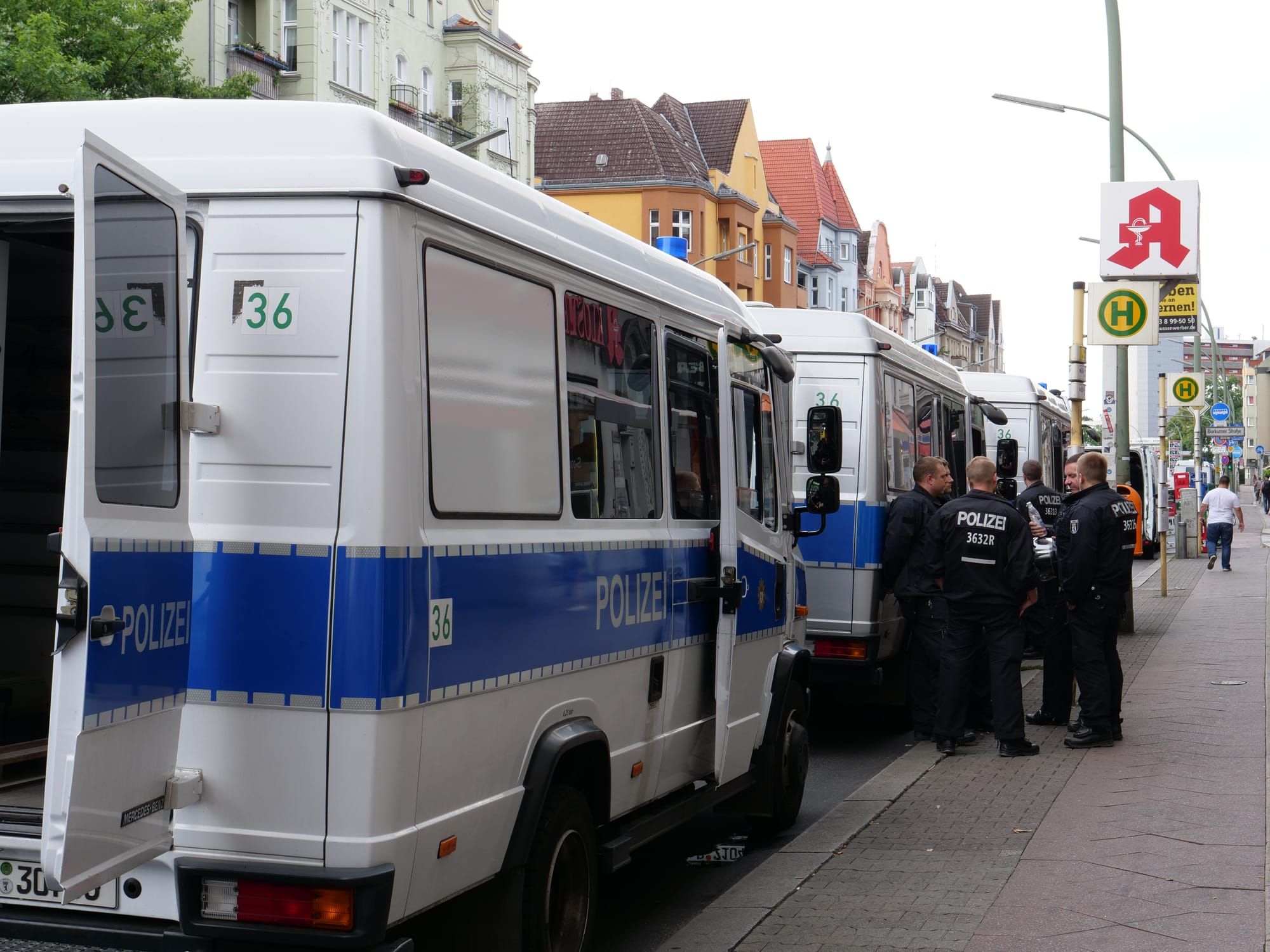
The police are on the hunt for saboteurs. On Tuesday morning, around 500 police officers carried out coordinated raids across Berlin and three other federal states, targeting what authorities describe as a left-wing extremist network linked to last year’s blackout in the southeast part of the city.
According to reporting by rbb, at least 17 properties were searched – 14 of them in Berlin, including locations in Kreuzberg, Neukölln, Wedding and Prenzlauer Berg. Among them was an anarchist library in Kreuzberg, where officers were seen removing laptops and other materials.
One lawyer described the police as "wildly groping in the dark."
Importantly, these raids do not relate to the attack this January claimed by the Vulkangruppe, which left huge swathes of Berlin without power – and for which the political effects are still rumbling on. Instead, the suspects being targeted here are believed to have committed an attack on two high-voltage pylons in Adlershof in September 2025. The resulting blackout left around 50,000 households and thousands of businesses without power for hours, causing damage estimated in the tens of millions. Briefly it stood as the longest power outage in Berlin since World War II – until this January, when the further act of sabotage claimed that record.
Four suspects, two men and two women in their late twenties and mid-thirties, have been identified as suspects. They are under investigation for arson, sabotage of critical infrastructure and forming a criminal organisation. However, despite the scale of the operation, no arrests have been made.
Given the lack of arrests and the rather vaguely drawn-up search warrants, some reporting has questioned whether these raids may have been a targeted attack on the left-wing scene. One lawyer described the police as "wildly groping in the dark." Among the confiscated items, the police seem to have taken donated mobile phones intended for refugees.
These raids do not relate to the attack this January claimed by the Vulkangruppe, which left huge swathes of Berlin without power.
The police themselves themselves stated that they seized phones, laptops and documents, which are now being investigated.
Interior Senator Iris Spranger defended the operation, stating that anyone who attacks critical infrastructure “attacks the security of the entire city.” Federal Interior Minister Alexander Dobrindt said authorities were closely monitoring the left-wing extremist scene following a series of infrastructure attacks.
But linking suspects to specific acts has proved difficult. Similar investigations in the past have struggled to translate surveillance and intelligence into charges that hold up in court. The evidence, and whether it results in any arrests, is still to come.