How Does It Feel to Cut Into a Human Brain?
As anatomical preparator at Charité hospital, Navena Widulin has spent 30 years cutting up cadavers — and she loves her job.
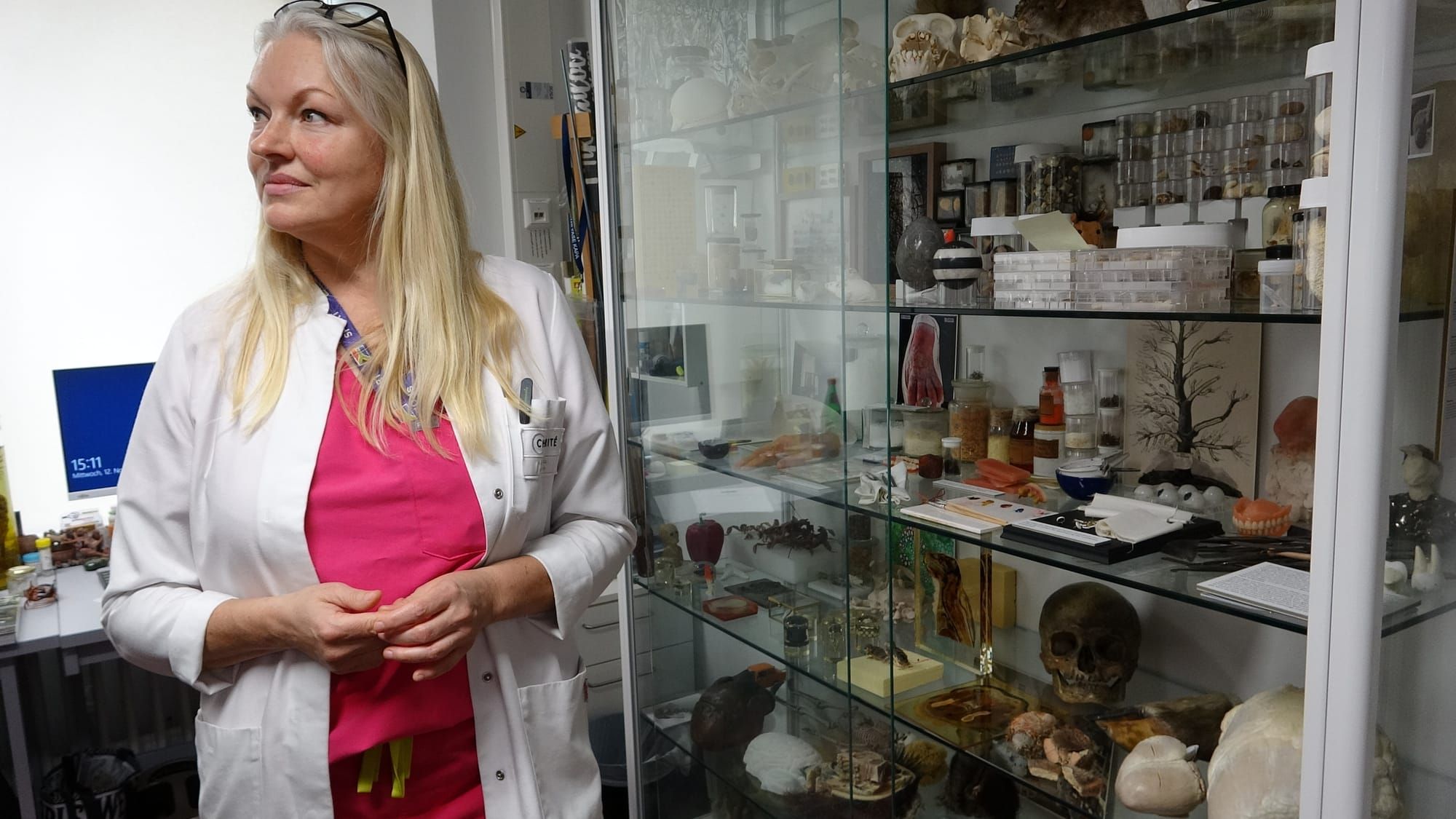
"A fresh human brain can be cut into only 10 slices," Navena Widulin explains. "But if you preserve it, it's much easier. Then you can make 20."
For over three decades, Widulin has been preparing and preserving cadavers at Charité research hospital – and she doesn't understand why anyone would doubt that she enjoys it. "They think I've got to be morbid, live in a house with black walls and skulls everywhere, but why? I take a lot of pleasure in what I do."
There is nothing gloomy about Widulin’s appearance when I visit her at the Rudolf Virchow Institute for Pathology: dressed in a white lab coat, bright pink scrubs and leopard skin socks, she’s about to lead a group of trainee preparators through a 90-minute seminar, the subject of which is displayed as a one-word slide at the outset: Leichenkonservierung. Corpse-preservation.
The class takes place in a grand lecture hall just opposite Hauptbahnhof, separated from the central station by the section of water where the Berlin-Spandauer Schifffahrtskanal meets the Spree. Only occasionally, as we pass through the building, through storage rooms, offices and operating theatres, am I able to glimpse some sign of the physical work of the autopsy: the cutting, sawing, slicing, grinding, drilling, puncturing, draining, cleaning and disinfecting.
Briefly, we stop inside one steeply tiered anatomical theatre where the students' seating encircles the cold metal dissection table, allowing close observation of how to carve open a cadaver. A little further on, we pass the elevator that brings the refrigerated dead up from the morgue: a full corpse is lying in the corridor on a gurney under a white sheet, slightly tented at the toes. At the corner of some of the rooms, regular household tools appear possessed with macabre new purpose: a saw; a large chisel; a mallet. But Widulin remains chatty, friendly, accommodating. It's only after she's proudly displayed the institute's electric bone saw that she asks about the class, in an offhand sort of way, "You won't mind, will you, if there are photographs?"
"No," I reply, following her eyes to the pile of handouts she is bringing to the class, some of which show detailed pictures of dead bodies, chopped into grisly sections. "I won't mind."
...the physical work of the autopsy: the cutting, sawing, slicing, grinding, drilling, puncturing, draining, cleaning and disinfecting.
Already in on it? Sign In