Berlin Identified The Origins of 574 Stolen Colonial Skulls. Will They Get To Go Home?
Berlin's S-Collection holds thousands of colonial-era human skulls. The Prussian Cultural Heritage Foundation has now traced the origins of 574 - and says it wants to return them.
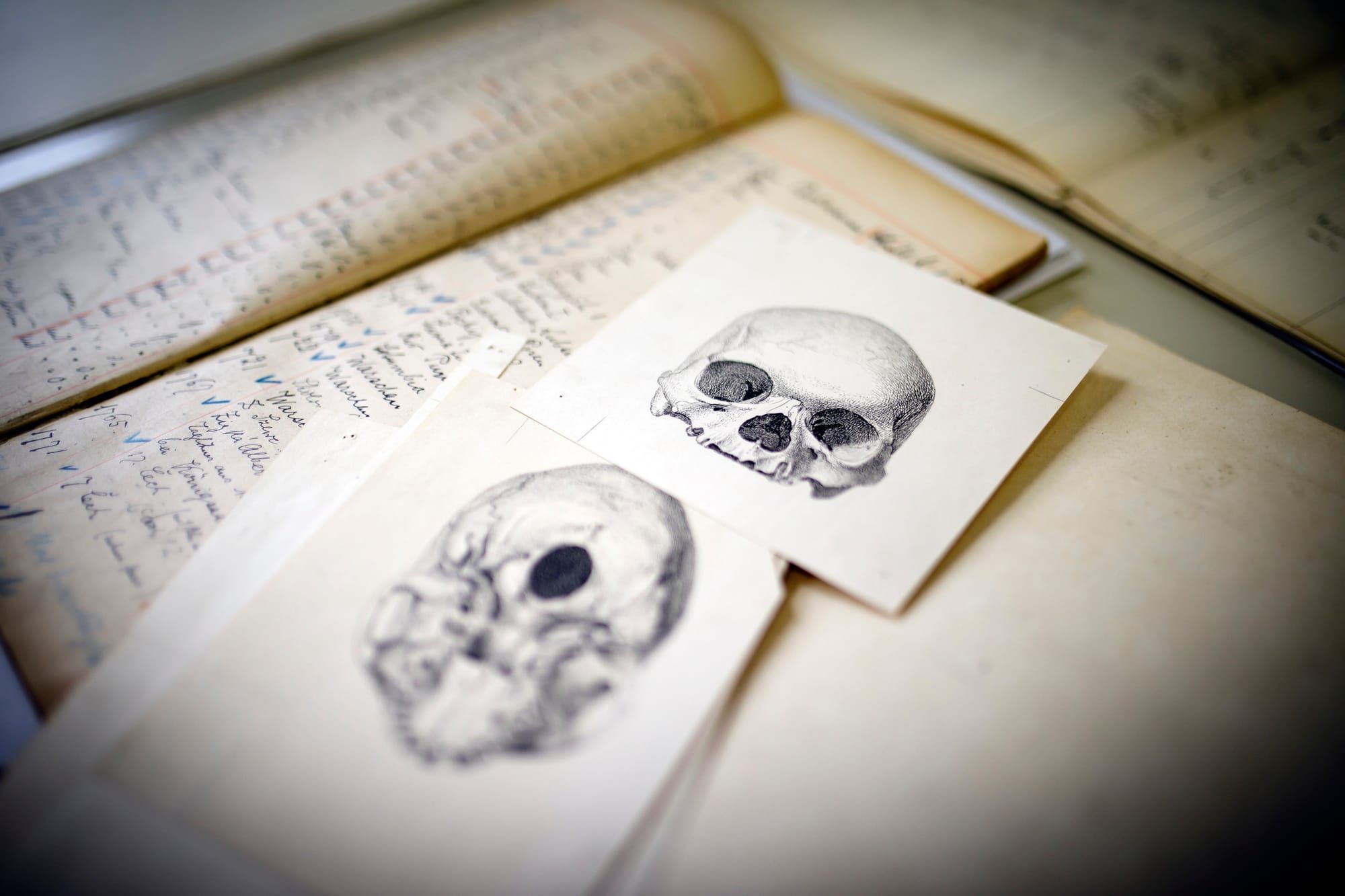
The S-Collection is one of the most controversial historical archives in Berlin: an assembly of around 7,700 colonial-era skulls gathered from people across the world. For years these human remains sat unexamined in basements, university depots, and storage facilities. Recently, thanks to the work of activists who have for years tried to bring attention to this archive of the dead, institutions have begun to look into where these bones actually came from.
On Wednesday, the Prussian Cultural Heritage Foundation in Berlin announced that they had completed a new round of research into their West African holdings, and determined the origins of 574 skulls from present-day Cameroon, Ghana, Togo, and Nigeria — all of which were stolen under German colonial rule. The museums also announced their willingness to return these human remains.
If at all possible, the human remains should be able to return to their place of origin.
The majority of these skulls reportedly belonged to people who died constructing the German colonial railways in Cameroon, though some were looted from burial grounds, collected from battlefields, or taken from people executed by German officers during the period of colonial rule in West Africa. All of them belong to the S-Collection assembled by Felix von Luschan, an Austrian anthropologist who built up one of the world's largest collections of human remains in Berlin as part of a project of scientific racism that aimed to track the development of human populations.
Announcing the results of their research, Prussian Cultural Heritage Foundation director Marion Ackermann said that “if at all possible, the human remains should be able to return to their place of origin." It should be noted, however, that willingness to return such remains has not always proved sufficient. In a similar project in East Africa, researchers were able to match DNA precisely to specific families — people who knew that an ancestor's skull was being held in a Berlin museum — and yet, due to political complications between the nations involved, the remains were not returned to their relatives.
The subject is sensitive, politically contested, and also appears to be of waning interest within Germany. This provenance research project took five years to complete and was conducted with the assistance of scholars from Togo and Cameroon. Researchers now estimate they now know the origins of 1,700 of the 7,700 skulls in the collection. Due to funding constraints, however, there do not appear to be plans for a further study — meaning that thousands of people held in Berlin's museums will, for now, remain anonymous.